IT support
IT support, the work Data Cross was built on.
Before phones and networks, there was this: the computers, the books, the registers and the printers a small business can’t work without. We still do it, for the same kind of clients we started with in 2006.

Security
Most small-business break-ins we see start with a stolen password or a missing patch.
Not a movie-style hack. We close the common doors:
On email, banking and anything with a login worth stealing.
Computers, firewalls, Wi-Fi and the phone system.
Staff work without administrator rights.
A copy offline or off site, and a test restore so you know they work.
Guest, camera and payment networks kept apart from the office.
Old accounts closed when people leave.
Email and files
Email that lands in the inbox, and can’t be faked.
We set up Microsoft 365 and Google Workspace, and move you onto them from GoDaddy, an old Exchange server or whatever the last person picked. Mail, calendars and contacts come across, and every phone and laptop gets reconnected.
Then we lock down the domain. Gmail and Yahoo started requiring sender authentication in 2024, and Microsoft followed, so mail without it is more likely to land in spam, and anyone can send mail that looks like it came from you.
Lists the servers allowed to send mail as your domain.
Signs every message so the receiver can tell it came from you and wasn’t changed.
Tells Gmail and Outlook what to do with mail that fails, and reports who’s trying to send as you.
Dropbox, OneDrive and Google Drive
Team folders set up with the right people in each, sharing links that expire, and two-step sign-in on every account. Moving from one to another, we carry the folder structure over intact and rebuild access for each person, so nobody loses files or gets into folders they shouldn’t.
Windows
Windows 10 support ended. The bill for staying keeps doubling.
Windows 10 reached end of support on October 14, 2025. Businesses can buy Extended Security Updates, but the price doubles every year: $61 a computer for the first year, $122 for the second. For most offices, upgrading or replacing is cheaper by year two.
We check which machines can run Windows 11, upgrade the ones that can, and set up replacements for the ones that can’t, with files, printers and programs moved over. New computers arrive set up, updated and ready for the person who uses them.
QuickBooks
QuickBooks Desktop on more than one computer is its own small network project: the company file on a host, Database Server Manager running, folder permissions set, and every workstation able to reach it. We set that up and fix it when multi-user mode breaks.
Intuit stopped selling new QuickBooks Desktop Pro Plus and Premier Plus subscriptions to new US customers after September 30, 2024, and Desktop 2024 is the last version, supported through September 30, 2027. If your version is aging out, we’ll help you choose between Enterprise, QuickBooks Online and staying put for now, and move your data either way.
Point of sale
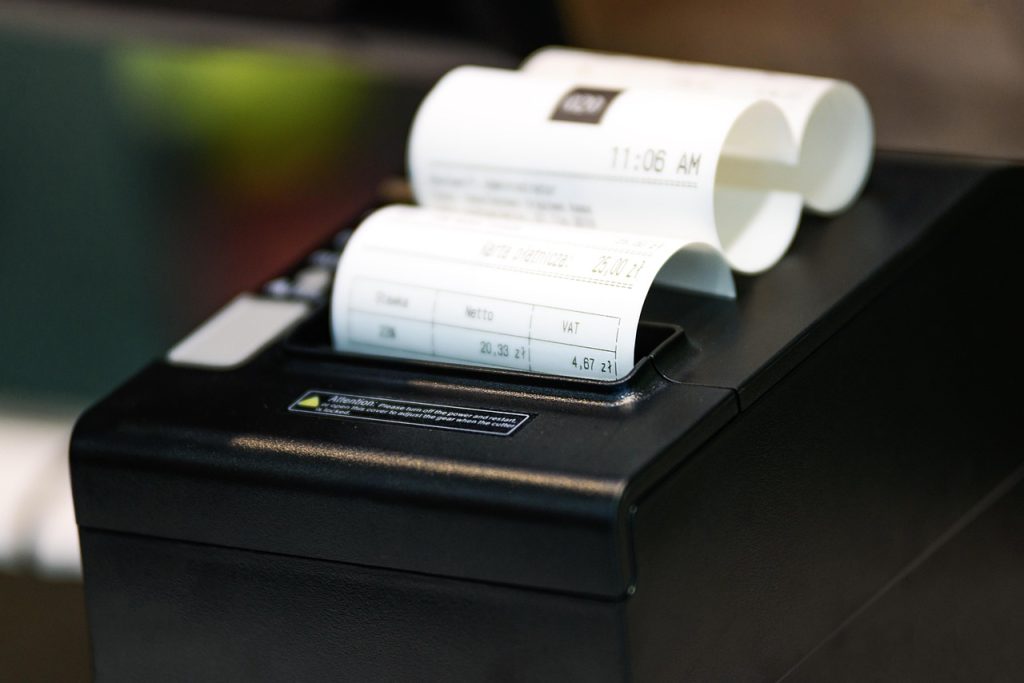
Registers that are patched, connected and kept apart.
Intuit discontinued QuickBooks Desktop Point of Sale on October 3, 2023. It still opens, but it gets no security patches and its card processing ended. A register on unpatched software that handles card data is a risk worth fixing. We help you move to a supported POS and keep it talking to your books.
For any POS, we set up the register computers, receipt printers, cash drawers, scanners and card terminals, and put payment devices on their own network so the rest of the office stays out of the picture.
Storage and backups
Synology NAS, set up like a file server should be.
Drives in RAID, shared folders with real permissions, and snapshots that let you roll a folder back after ransomware or an accidental delete.
Computers back up to it automatically with Active Backup for Business, and the NAS itself copies off site with Hyper Backup, so one fire or theft doesn’t take everything.


Printers, including large format
Every computer prints. Big files don’t stall the queue.
Office printers and copiers on the network with scan to email and scan to folder working, and drivers and print queues set up so every computer prints.
For print and sign shops: wide-format printers like HP DesignJet, Canon imagePROGRAF and Epson SureColor on wired connections, RIP workstations set up, and shared storage fast enough to move large production files without slowing everyone else down. We started with print shops and still work with them.
New systems are UniFi Protect (see Ubiquiti networks). If you already have an IP camera system, we’ll tell you whether it’s worth keeping, get it recording and viewable again, and fix what’s wrong.
For dental, medical and home care offices, we sign a HIPAA business associate agreement before we work on systems that hold patient information, and RingCentral signs its own for RingEX. Phones, network, computers and backups are set up with the access controls, encryption and sign-in protection HIPAA’s security rule expects.
For anyone taking cards, payment terminals sit on their own network and unsupported register software gets replaced, which shrinks how much of your office PCI rules cover. Compliance stays your program; we build the technical side so it holds up when someone checks.
Service calls are hourly, quoted in advance for anything bigger. See pricing →
Value-added reseller
Brands we sell, install and support.
Data Cross is a value-added reseller through Ingram Micro and ADI. The quote, the order and the install all come from one place.
Distributors

Brands we sell